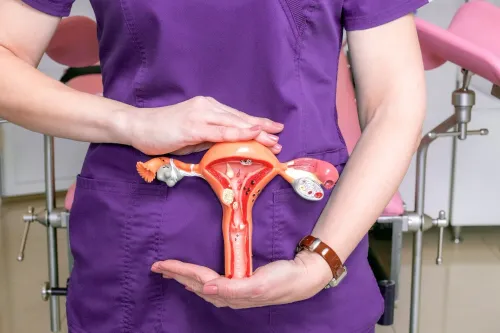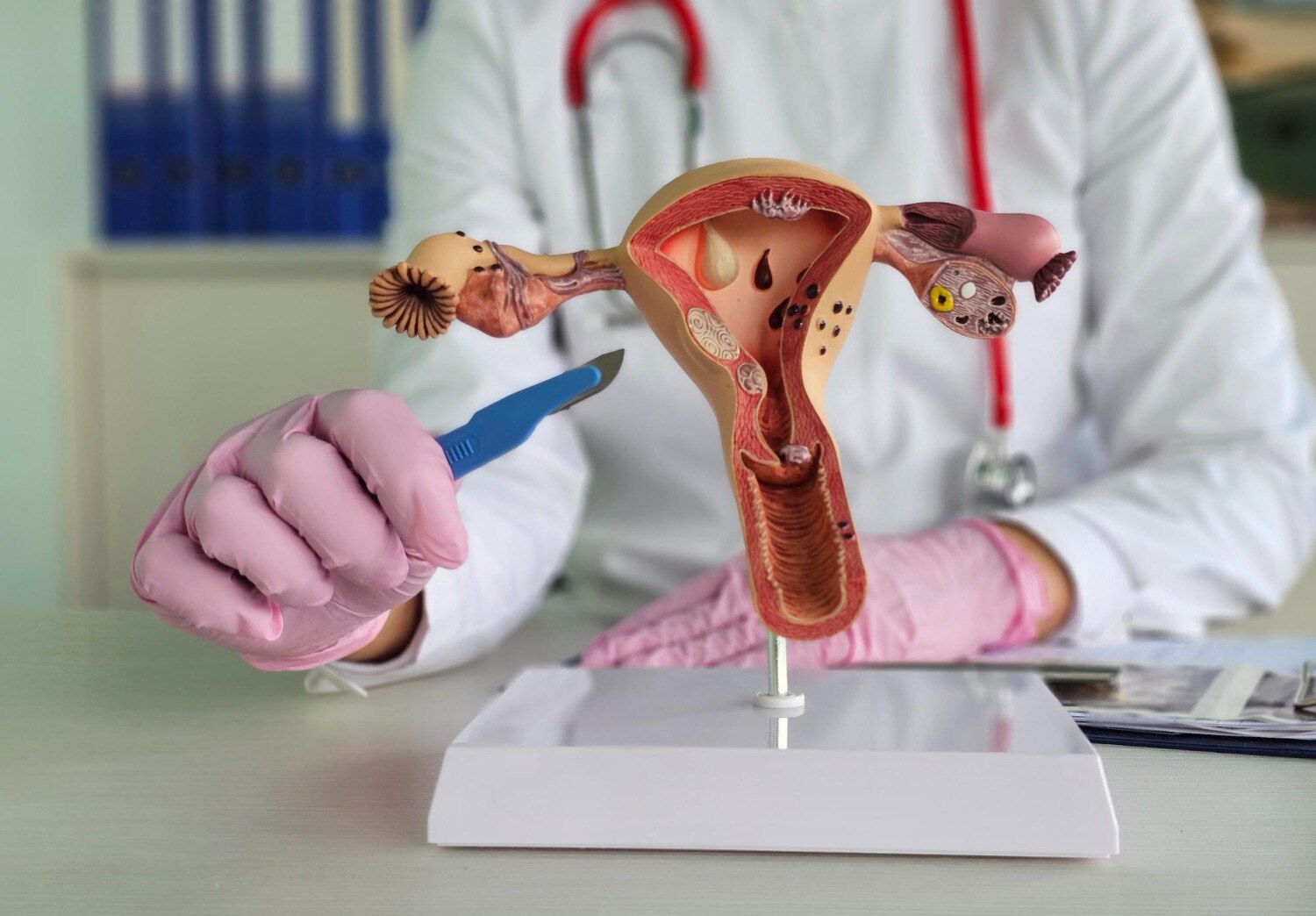
The right route depends on the uterus’s size and mobility, the suspected condition, your previous operations, cancer risk and whether you want future pregnancy—not simply on which technology a hospital advertises. By comparing surgical routes, what is removed, uterus-preserving treatments and provider capabilities, you can prepare more precise questions for your gynaecologist.
Key takeaways
- Abdominal surgery usually involves a longer recovery than vaginal or minimally invasive routes.
- Hysterectomy may remove the uterus alone or include the cervix, tubes and ovaries.
- Ask whether fibroids, bleeding or pain have uterus-preserving treatments first.
- Compare surgeon experience, hospital facilities, route suitability and follow-up care.
How do abdominal, vaginal, laparoscopic and robotic hysterectomy options differ?
The four hysterectomy routes differ mainly in where the surgeon enters, how long recovery takes and what anatomy allows.
| Route | Incision location | Hospital stay and recovery | Main limitations |
|---|---|---|---|
| Abdominal/open | One larger incision in the lower abdomen | Usually the longest stay and recovery, with more wound discomfort | Useful for a very large or immobile uterus, extensive adhesions, complex endometriosis, previous operations or suspected malignancy |
| Vaginal | The uterus is removed through the vagina; no abdominal incision | Generally fewer complications and faster recovery than open surgery | Requires a mobile uterus and a suitable vaginal route |
| Laparoscopic | Several small abdominal incisions | Usually a shorter stay, smaller wounds and faster recovery than open surgery | Can take longer and may need conversion to open surgery |
| Robotic-assisted | Small abdominal incisions, using robotic instruments | Similar recovery principles to laparoscopy | It is robotic-assisted laparoscopy, not a separate removal procedure, and does not automatically produce a better result |
A large uterus, obesity, adhesions, endometriosis, prior abdominal surgery or suspected cancer can make minimally invasive surgery difficult. Conversion to open surgery is a recognised safety decision, not necessarily a failure. Recovery restrictions for driving, lifting, work and sex depend on pain, wounds, mobility and examination; vaginal bleeding or discharge can continue during healing.
Ask which route fits your anatomy and diagnosis, how often the surgeon performs it, and the expected stay. Include bleeding, infection, clots, bladder, ureter or bowel injury, anaesthetic complications, transfusion and another operation in consent.
A search for uterus removal surgery for options in Mumbai should also compare these details, not just equipment or marketing claims.
What exactly will be removed: uterus, cervix, tubes or ovaries?
1. Read the consent form before signing and match it with the discharge summary. A total hysterectomy removes the uterus and cervix. A subtotal or supracervical hysterectomy removes the uterus but leaves the cervix in place.
2. Check the tubes and ovaries separately. Hysterectomy alone does not mean either has been removed. Salpingectomy means removal of one or both fallopian tubes; oophorectomy means removal of one or both ovaries. Removing healthy tubes while conserving healthy ovaries may be discussed as a separate choice.
3. Ask why ovarian removal is proposed. Removing both ovaries before natural menopause causes immediate surgical menopause, including hot flushes, and creates longer-term health considerations. It is not an automatic part of benign-disease surgery. The decision should reflect your age, ovarian disease, cancer or genetic risk, family history and preferences.
4. Confirm the screening plan. If the cervix remains, cervical screening continues under the applicable programme. Screening can still matter after total hysterectomy for cervical precancer or cancer, or if the cervix was not actually removed.
5. Ask the surgeon to write down exactly what will be removed, why, and whether pathology will examine each specimen. If you are researching uterus removal surgery for options in Mumbai, carry this checklist to every consultation and compare the written plan, not verbal shorthand.
When is hysterectomy better than a uterus-preserving treatment?
Hysterectomy is better when you need a definitive solution, have completed childbearing, and symptoms come from disease that other treatments cannot safely or effectively control. Choosing hysterectomy options in Mumbai requires matching the operation to the diagnosis, symptom cause, uterine anatomy and pregnancy plans—not choosing the most extensive procedure first.
The same applies when comparing uterus removal surgery for options in Mumbai.
| Treatment | Best fit | Important limitation |
|---|---|---|
| Hysteroscopic removal | A submucosal fibroid projecting into the uterine cavity | Does not treat large intramural or outer-wall fibroids |
| Myomectomy | Fibroids when future pregnancy or uterine preservation matters | Fibroids can recur |
| Medicines or a levonorgestrel-releasing intrauterine system | Heavy bleeding when the cause and uterine anatomy suit treatment | Does not remove fibroids or treat every cause |
| Uterine-artery embolisation | Shrinking suitable fibroids without removing the uterus | Fertility prospects and recurrence differ from myomectomy |
| Endometrial ablation | Selected heavy bleeding when future pregnancy is not wanted | Not suitable for every fibroid pattern |
| Pelvic-floor treatment | Prolapse symptoms with a normal uterus | Treats support problems rather than uterine disease |
| Hysterectomy | Definitive treatment when disease is significant, childbearing is complete and alternatives are unsuitable | Permanently ends pregnancy |
Adenomyosis, endometriosis, abnormal bleeding, large intramural fibroids and prolapse need different evaluations. Hysterectomy is the wrong first choice when you want pregnancy, symptoms have no confirmed uterine cause, or a reasonable less-invasive treatment has not been tried. For precancer or cancer, staging, pathology and gynaecologic-oncology input must guide surgery; a benign-disease operation is insufficient.
How does a doctor decide whether you are suitable for each route?
Suitability depends on your anatomy, diagnosis and safety risks, not an automatic test package. A uterus removal doctor in Mumbai may recommend a pelvic examination, ultrasound, blood tests, cervical screening or endometrial sampling when your bleeding pattern, age, examination or imaging makes each test relevant.
Ask whether the assessment includes:
- Previous abdominal operations, caesarean births, adhesions, obesity, anaesthetic history, blood-clot risk, other medical conditions and every medicine you take.
- MRI when ultrasound cannot answer whether you have adenomyosis, deep endometriosis, a large or distorted uterus, or suspected cancer.
- The effect of a large uterus, extensive endometriosis, adhesions or prior surgery on vaginal or laparoscopic access.
- A cancer-specific plan if examination, imaging or biopsy raises concern. Suspected malignancy can require specialist staging and pathology rather than routine benign-disease surgery.
- The safety plan if a laparoscopic or vaginal operation needs conversion to an open abdominal operation. Conversion is a recognised contingency, not necessarily a failure.
- Whether morcellation is proposed. Morcellation divides tissue into smaller pieces for removal; it is not another name for laparoscopy.
- If sarcoma is a concern, how patient selection, preoperative assessment, contained techniques and alternatives will reduce the risk of spreading malignant tissue through power morcellation.
Ask the surgeon to explain which finding determines the route and what would change the plan. That answer is more useful than choosing a hospital because it advertises robotic equipment.
How can you compare a uterus surgery hospital and surgeon in Mumbai?
A consultation should test capability, not just display equipment. Verify the surgeon’s registration and qualifications through the National Medical Commission Indian Medical Register, then ask how often they perform your proposed route and how often surgery converts to an open operation.
| Option | What to ask about the surgeon | Key limitation |
|---|---|---|
| Vaginal | How often they perform it | Requires a suitable, mobile uterus and vaginal access |
| Laparoscopic | Their case volume and conversion rate | Adhesions, large uteri or cancer concerns can complicate it |
| Robotic-assisted | Their robotic experience and outcomes | It remains laparoscopy and does not guarantee a better result |
| Open abdominal | Their experience with complex cases | Larger incision, longer hospital recovery and slower healing |
Confirm that the hospital provides anaesthesia support, blood transfusion, intensive care, imaging, pathology and emergency re-operation access. Ask who will manage a bladder, ureter or bowel injury, and whether a gynaecologic-oncology service can review the case if imaging or biopsy raises a cancer concern.
Do not compare headline complication rates without checking case mix. A surgeon treating large uteri, severe adhesions or cancer faces a different risk profile from one treating straightforward benign disease.
At Delight Women's Hospital 9321132638, bring your fertility plans, prior operation records, medication list and test reports. Request written details of the planned route, organs to be removed, recovery restrictions, warning signs and follow-up.
This lets you compare a uterus surgery hospital in Mumbai and a uterus removal doctor in Mumbai by safety systems and suitability, not marketing language.
Related services
Gynaecology Services Uterus removal, medically known as hysterectomy, is a surgical procedure recommended for various conditions such as uterine fibroids, heavy menstrual... View service → |
Laparoscopy Laparoscopic Myomectomy is a minimally invasive surgical procedure for the removal of uterine fibroids while preserving the uterus, making it an... View service → |
Frequently asked questions
How do abdominal, vaginal, laparoscopic and robotic hysterectomy differ?
Abdominal hysterectomy uses a larger incision through the abdomen. Vaginal hysterectomy removes the uterus through the vagina. Laparoscopic surgery uses small abdominal incisions and a camera. Robotic hysterectomy uses robotic instruments controlled by the surgeon through small incisions. Recovery depends on the route, the operation performed and your health.
What organs can be removed during a hysterectomy?
The surgeon may remove the uterus alone, the cervix with the uterus, the fallopian tubes, or the ovaries. Removal of both ovaries causes surgical menopause before natural menopause, so ask why each organ needs removal.
When is hysterectomy better than a uterus-preserving treatment?
Hysterectomy can be appropriate when conditions such as fibroids, adenomyosis, endometriosis or heavy bleeding persist despite suitable treatments, or when preserving the uterus is not medically appropriate. Discuss medicines, uterine artery embolisation, myomectomy and other alternatives when they fit your diagnosis.
How does a doctor decide which hysterectomy route is suitable?
The decision considers uterine size and position, previous abdominal surgery, suspected cancer, pelvic disease, vaginal access, medical conditions and the surgeon’s examination and imaging findings. Ask which routes are safe for you and why one offers the best balance of risk and recovery.
How should you compare a uterus surgery hospital and surgeon in Mumbai?
Ask about the surgeon’s training and experience with your proposed route, the hospital’s operating and anaesthesia facilities, emergency support, pathology services, complication management and follow-up schedule. Request a written estimate of the procedure, tests, hospital stay and follow-up care.
Related services
Gynaecology Services Uterine fibroids are non-cancerous growths in the uterus that can cause heavy menstrual bleeding, pelvic pain, bloating, and fertility challenges. View service → |
Laparoscopy Hysteroscopy Hysteroscopy is a minimally invasive gynecological procedure that allows doctors to examine the inside of the uterus using a thin, lighted instrument... |
Laparoscopy Total Laparoscopic Hysterectomy (TLH) is a minimally invasive surgical procedure in which the uterus is removed using advanced laparoscopic techniques. View service → |
Keywords