The ICSI journey involves several separate checkpoints: ovarian stimulation, timed egg retrieval, laboratory fertilisation, embryo culture and transfer. Knowing what happens at each checkpoint helps you interpret changing numbers, prepare for procedure day and ask a Mumbai fertility team how it will handle fresh transfer, freezing or an altered plan.
Key takeaways
- Stimulation usually lasts 8–12 days before the trigger injection and egg retrieval.
- Ultrasound and estradiol tests guide medication changes and help detect an excessive response.
- ICSI injects one sperm into a mature egg; embryos are assessed through days 1 to 6.
- Ask clinics about laboratory standards, embryology expertise, transfer timing and emergency support.
Before egg collection: stimulation, monitoring and the trigger injection
Before retrieval, you usually take daily injectable gonadotropins for about 8–12 days to stimulate several ovarian follicles instead of one natural follicle. The clinic tracks follicle growth with transvaginal ultrasound and checks hormone blood tests, especially estradiol, so the dose can be adjusted and excessive response detected.
The ICSI treatment process before egg collection usually follows these steps:
- Start stimulation injections on the prescribed cycle day. Do not change doses or skip injections without contacting the clinic.
- Attend monitoring visits every few days. Ultrasound measures each follicle, while blood tests show how the ovaries are responding.
- Receive a trigger injection when enough leading follicles have reached the clinic’s target size, commonly around 17–20 mm, with hormone results supporting readiness. The trigger may contain hCG or use a GnRH-agonist protocol.
- Schedule egg retrieval about 34–36 hours after the trigger, before spontaneous ovulation. Write down the exact injection time and do not move it without speaking to the clinic.
This timing explains what happens during ICSI for treatment in Mumbai: the trigger completes final egg maturation, while retrieval is arranged before the follicles release their eggs. Follicle count does not guarantee the same number of eggs; some follicles contain none, and some retrieved eggs are immature or degenerated.
Egg retrieval day: aspiration, sperm collection and recovery
Egg collection usually takes place as a short, ultrasound-guided procedure under sedation or analgesia. You lie on an examination table while the doctor passes a fine needle through the vaginal wall into each accessible follicle and gently aspirates its fluid. No abdominal incision is made, and the ovaries are not removed.
- The clinic confirms your identity, consent, medicines and fasting instructions, then starts sedation or pain relief.
- The doctor uses a vaginal ultrasound probe to guide the needle into the follicles and sends each fluid sample to the laboratory, where staff search for eggs. Some follicles contain no egg, while some eggs are immature or degenerated.
- The embryologist checks maturity. Only mature oocytes are normally suitable for ICSI, so the number collected is not the number injected.
- The male partner provides a semen sample in a private collection room, usually on the same day. The laboratory processes it to select usable sperm by movement and appearance; if ejaculation is not possible, the team may use previously frozen or surgically retrieved sperm.
- The embryologist later performs the ICSI procedure steps in the laboratory, not during the aspiration itself. The sample and mature eggs move into the laboratory stage of the ICSI process in Mumbai.
You rest in recovery until alert, often for a few hours. Arrange an escort and avoid driving, alcohol and strenuous activity that day. Mild cramps, pelvic heaviness and light spotting are common; contact the clinic for severe pain, heavy bleeding, fever, faintness or breathing difficulty.
Inside the laboratory: which eggs are injected and how ICSI is performed
Only mature oocytes are normally injected. The laboratory examines each collected egg and classifies it as mature, immature or degenerated. At the same time, the semen sample is processed to concentrate usable sperm; the embryologist selects one with suitable movement and appearance, but this does not confirm genetic normality.
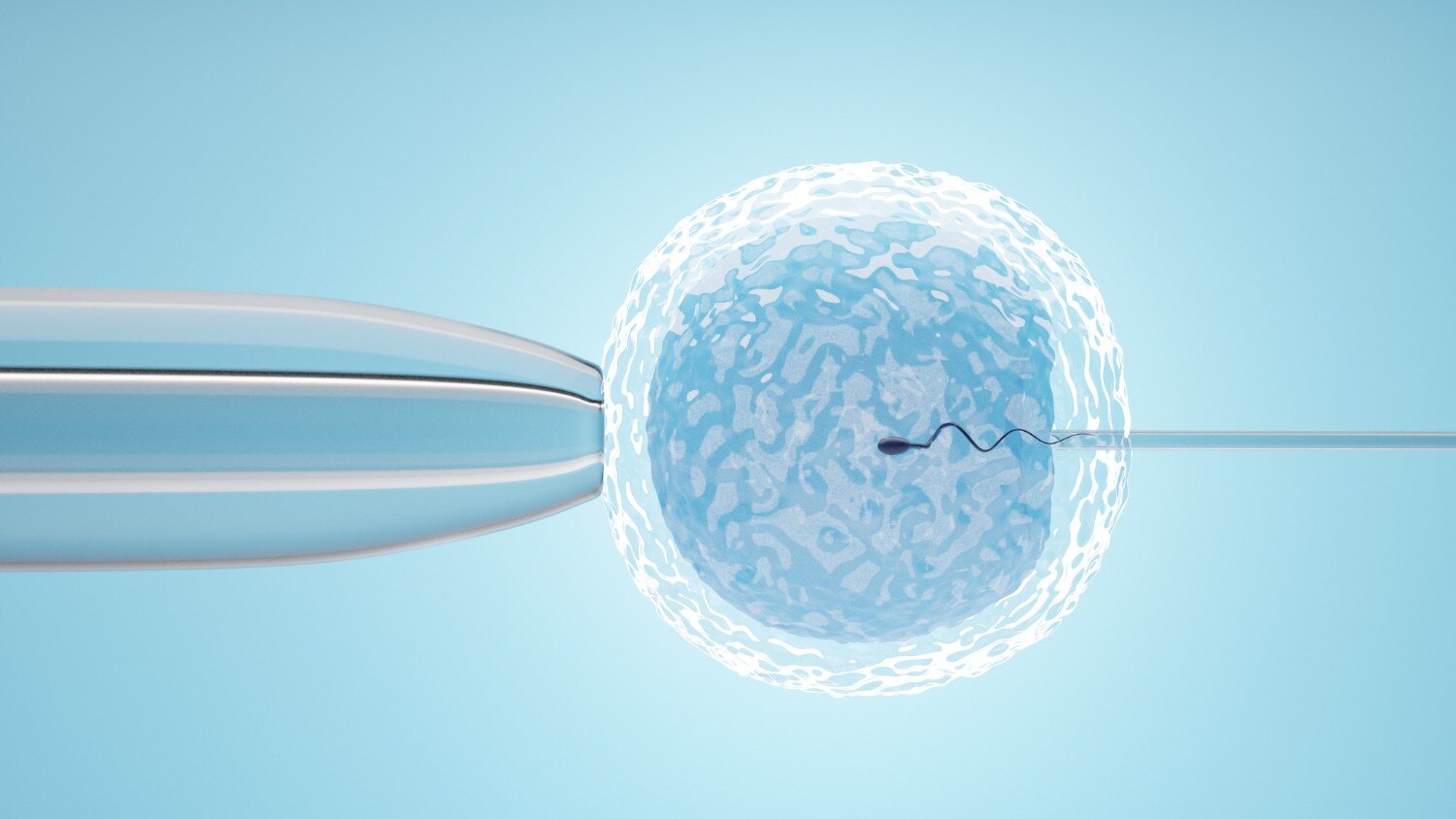
The ICSI procedure steps use two micromanipulation pipettes. The embryologist immobilises and draws one sperm into a fine injection pipette, holds the egg steady with a second pipette, passes through its outer layers and releases the sperm into the cytoplasm.
| Stage | What it means | Why the number changes |
|---|---|---|
| Collected eggs | Eggs aspirated from follicles | Some follicles contain no egg; others yield damaged or degenerated eggs |
| Mature eggs | Eggs at the correct maturity for injection | Some retrieved eggs are immature and are not suitable for ICSI |
| Fertilised eggs | Injected eggs showing two pronuclei the next day | The injection can damage an egg, and some eggs do not fertilise |
The ICSI treatment process usually involves injection on day 0 and a fertilisation check around day 1.
A fertilised egg still must divide and develop; not every one reaches a usable blastocyst, so the laboratory should report collected, mature and fertilised eggs as separate figures rather than treating the first number as the expected embryo count.
From fertilisation check to embryo choice: days 1 to 6
By the next morning, the embryologist checks each injected egg for two pronuclei, called 2PN. This confirms normal fertilisation; no pronuclei, or an abnormal number, usually means the egg is not suitable for continued culture.
During days 2 and 3, normally fertilised eggs divide into embryos with several cells. Not every fertilised egg keeps developing. By days 5 and 6, suitable embryos may form blastocysts, the stage commonly considered for transfer, freezing or biopsy.
- Day 1: Record fertilisation as normal, abnormal or absent after checking pronuclei.
- Days 2–3: Monitor cell division, fragmentation and uneven development.
- Days 5–6: Assess blastocyst expansion, inner cell mass and trophectoderm before deciding its next step.
- At every stage: Record attrition separately; collected eggs, mature eggs, fertilised eggs and transferable embryos are different numbers.
A fresh transfer uses a suitable embryo in the same stimulation cycle. If ovarian hyperstimulation risk, progesterone timing, illness or another clinical issue makes immediate transfer unsuitable, the laboratory vitrifies suitable embryos for a later uterine-lining preparation cycle.
For genetic testing, the team biopsies selected blastocysts and freezes them while the sample is analysed; testing does not make an embryo genetically normal. Ask how the clinic defines fertilisation, blastocyst, transfer, cancellation and live-birth rates when comparing what happens during ICSI for treatment in Mumbai or reviewing an ICSI process in Mumbai.
Embryo transfer, pregnancy testing and symptoms that need urgent attention
A soft catheter carries the selected embryo through the cervix into the uterine cavity, usually with ultrasound guidance. The embryo is not placed directly into a fallopian tube; the clinician checks the catheter after withdrawal to confirm it is empty.
The transfer usually needs no anaesthetic or only minimal medication. You can leave after a short rest, continue prescribed progesterone, and follow the clinic’s instructions. Bed rest does not improve implantation, but avoid stopping medicines without medical advice.
The ICSI treatment process does not end at transfer. Take the pregnancy test on the date given, usually a blood beta-hCG test about 9 to 14 days later; testing too early can mislead you. Mild cramps or light spotting can occur, but they do not confirm pregnancy or failure.
Contact the treating centre urgently if you have:
- Heavy bleeding, severe or one-sided abdominal pain, fainting, fever, or worsening pain
- Persistent vomiting, marked abdominal swelling, reduced urine, chest pain, or breathing difficulty
- A positive pregnancy test followed by pain or bleeding
These checks are part of the ICSI procedure steps, not signs that the transfer itself has failed.
How to compare an ICSI fertility clinic in Mumbai
Choose an ICSI fertility clinic in Mumbai by asking why ICSI is recommended, whether conventional IVF is reasonable, who performs the injection, and which laboratory cultures and freezes embryos. Ask how the ICSI process in Mumbai is monitored, what happens if no embryo reaches transfer, and what the written cancellation and refund policy covers.
Delight Women's Hospital 9321132638 can be one clinic you compare, using the same questions at every centre.
- Ask for the clinic’s ART registration details and the registration of any associated ART bank under the Assisted Reproductive Technology (Regulation) Act, 2021 and its rules.
- Request outcome figures with definitions, not one advertised success percentage.
- Check whether results are reported per cycle started, egg collection, embryo transfer or patient, and whether “success” means positive test, clinical pregnancy or live birth.
| Check | What to verify | Why it matters |
|---|---|---|
| Registration | ART clinic and bank registration | Confirms legal registration, not laboratory quality |
| Stages | Fertilisation, blastocyst, transfer and cancellation rates | Shows attrition between eggs and embryos |
| Endpoint | Live births and reporting denominator | Makes clinic comparisons fair |
Related services
Infertility ICSI Intracytoplasmic Sperm Injection (ICSI) is an advanced fertility treatment offered at Delight Women’s Hospital, Dadar East, under the expert guidance... |
Infertility Embryo freezing, also known as embryo cryopreservation, is a highly effective fertility preservation technique offered at Delight Women’s Hospital,... View service → |
Frequently asked questions
How long does ovarian stimulation take before ICSI egg collection?
Daily gonadotropin injections usually continue for about 8–12 days. Transvaginal ultrasound and estradiol blood tests track follicle growth and guide dose adjustments before the trigger injection.
What happens on the day of ICSI egg retrieval?
The clinic aspirates mature follicles to collect eggs, obtains a sperm sample, and monitors your recovery after the procedure.
Which eggs are used for ICSI?
The embryology team identifies mature eggs and injects one selected sperm directly into each suitable egg. Immature or unsuitable eggs are not injected.
When is the embryo transferred after ICSI?
The laboratory checks fertilisation on day 1 and monitors embryo development through days 2 to 6. The transfer date depends on embryo development and the treatment plan.
How do you compare an ICSI fertility clinic in Mumbai?
Compare its embryology laboratory, monitoring plan, anaesthesia and recovery arrangements, embryo-transfer policy, pregnancy-testing instructions and urgent-care access.
Keywords