Choosing a hospital is only one part of deciding whether hysterectomy is appropriate. You need to compare the diagnosis, uterus-preserving options, surgical route, ovarian plan, hospital capabilities and follow-up arrangements before consenting to permanent loss of fertility.
Key takeaways
- Try non-surgical treatment first when symptoms are manageable and cancer is not suspected.
- Hysterectomy ends fertility; ovary removal can trigger immediate surgical menopause.
- Compare surgical route, surgeon expertise, emergency cover and total recovery support.
- Ask when you can drive, work, exercise and recognise warning signs after discharge.
When is hysterectomy justified, and when should you try another treatment first?
Hysterectomy is justified when cancer or precancer requires it, or when severe bleeding, pain, pressure, prolapse or anaemia persists despite suitable treatment. It is a definitive operation: removing the uterus ends pregnancy permanently, so symptoms alone do not make it the right first choice.
Before consenting to uterus removal surgery in Mumbai, ask for a diagnosis supported by examination, ultrasound or MRI when indicated, and tissue testing for abnormal bleeding. Ask what has been tried, how long it was used, and why it failed. If you may want children, request a fertility-preserving plan before discussing hysterectomy.
Ask whether your diagnosis allows:
- Medicines or a levonorgestrel-releasing intrauterine system for heavy bleeding.
- Myomectomy to remove fibroids while retaining the uterus, when their number, size and location make it suitable.
- Uterine artery embolisation for selected symptomatic fibroids.
- Endometrial ablation for carefully selected heavy-bleeding patients who do not want future pregnancy; it is not a fertility treatment.
- Pelvic-floor physiotherapy, a pessary or prolapse repair when weakness or prolapse causes the symptoms.
Hysterectomy becomes more compelling when bleeding remains dangerous, a uterus-preserving treatment is unsuitable or has failed, prolapse is severe, or cancer treatment requires wider removal. Ask whether conserving the ovaries is appropriate; removing them can trigger immediate surgical menopause and is not automatic in benign disease.
Which organs will be removed, and what happens to fertility, periods and menopause?
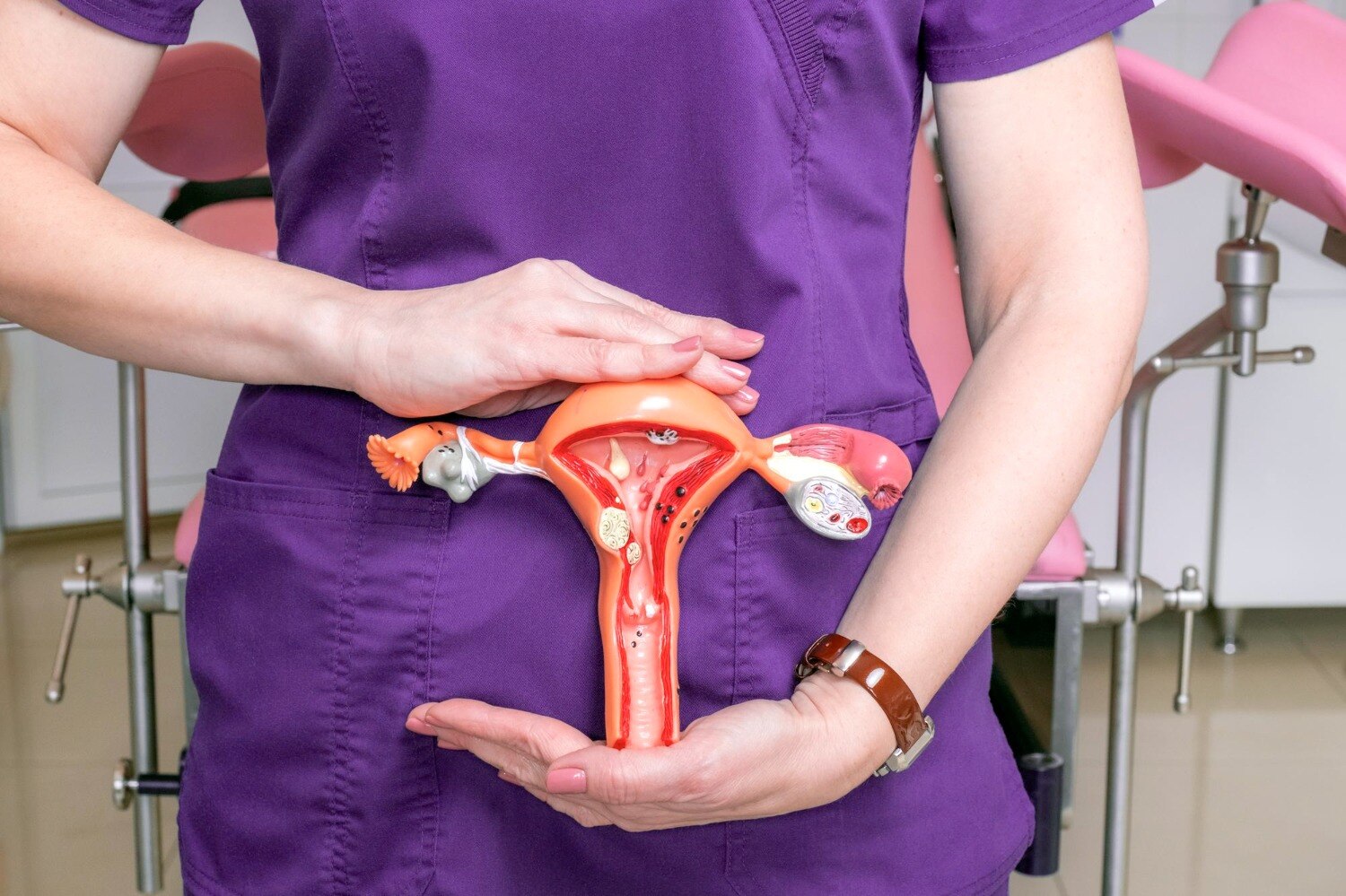
A hysterectomy permanently ends pregnancy because the uterus is removed; clarify the planned extent before consenting. A female surgery specialist in Mumbai should state whether the cervix, fallopian tubes or ovaries are included, rather than treating “hysterectomy” as removal of every reproductive organ.
| Option | Removed | What remains and what changes |
|---|---|---|
| Total | Uterus and cervix | No periods and no pregnancy. Ovaries and tubes may remain. |
| Subtotal or supracervical | Uterus, not cervix | Pregnancy is impossible and periods generally stop, although cyclical spotting can occur. Cervical screening remains relevant. |
| Radical | Uterus, cervix and surrounding tissues, often the upper vagina | Used for selected cancers; it is more extensive than routine surgery. |
| Combined procedure | Hysterectomy plus salpingectomy, oophorectomy, or both | Salpingectomy removes tubes while conserving ovaries. Oophorectomy removes one or both ovaries. |
Removing the ovaries before natural menopause can trigger immediate surgical menopause, with hot flushes, vaginal dryness, sleep or mood changes and longer-term health considerations. Ask why ovarian removal is needed for cancer, ovarian disease or genetic risk, and whether ovarian conservation is safe. Removing tubes alone does not cause menopause.
If the cervix remains, continue the cervical-screening plan. After total hysterectomy for benign disease, screening may not be needed without a history of high-grade precancer; cancer or high-grade precancer requires individual follow-up. If you want children, ask about uterus-preserving options such as myomectomy before choosing hysterectomy.
How do vaginal, laparoscopic, robotic and abdominal operations differ?
For benign disease, vaginal hysterectomy is generally preferred when feasible; laparoscopic surgery is often favoured over an open abdominal operation when the vaginal route is unsuitable. The routes are not interchangeable.
| Option | Incision and visibility | Complexity and conversion | Stay and recovery |
|---|---|---|---|
| Vaginal | No external abdominal incision; access through the vagina, with less camera visibility | Difficult with a very large uterus, extensive adhesions or limited access; conversion to laparoscopy or open surgery can be necessary | Usually shorter stay and faster recovery than abdominal surgery |
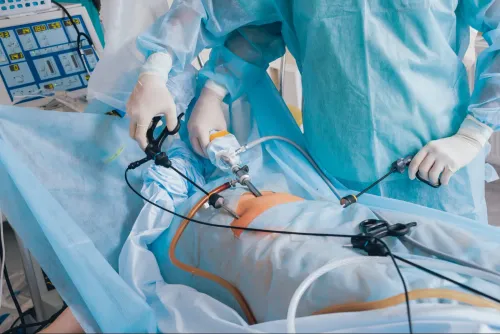
| Laparoscopic | Several small abdominal ports; a camera provides magnified internal views | Suits many complex cases, but bleeding, adhesions, anatomy or suspected cancer can require conversion to open surgery | Usually less pain and a quicker return to activity than abdominal surgery |
| Robotic | Several small ports; robotic instruments provide magnified, often three-dimensional views and wrist-like movement | Helps with precise dissection but remains laparoscopic surgery; it does not remove conversion risk or make every case safer | Recovery is usually similar to laparoscopic surgery |
| Abdominal | One larger abdominal incision; broad direct access and visibility | Useful for a very large uterus, extensive disease or cancer-related surgery; it starts as open surgery | Longer hospital stay, more wound discomfort and slower recovery |
Ask the surgeon for their conversion rate from laparoscopic or robotic to open surgery, not just the hospital’s advertised approach. When comparing a uterus removal hospital in Mumbai, ask which route fits your uterus size, adhesions, diagnosis and prior operations—not which technique is marketed as minimally invasive.
What should you compare when choosing a nearby hospital in Mumbai?
Choose the hospital that can manage the whole operation, not merely the one closest to home. For uterus removal surgery Dadar or a hysterectomy hospital Wadala, compare the surgeon’s experience with your planned route, the hospital’s emergency support, and its ability to treat bleeding, infection, urinary-tract, bowel or clotting complications.
| Factor | What to verify | Why it matters |
|---|---|---|
| Surgeon | Experience with vaginal, laparoscopic, robotic and abdominal hysterectomy; conversion-to-open rates | A planned minimally invasive operation can require open surgery |
| Assessment | Examination, complete blood count, haemoglobin, medical history and review of previous operations | Anaemia, adhesions, obesity and clotting risks change planning |
| Imaging | Pelvic ultrasound, and MRI when fibroids, adenomyosis or complex anatomy require mapping | Imaging helps select the safest route |
| Pathology | Who examines the removed tissue and how unexpected findings are reported | The diagnosis must be confirmed after surgery |
| Anaesthesia | An anaesthetist’s preoperative review and a plan for pain control and clot prevention | Anaesthetic risks depend on your health, medicines and operation |
| Blood and ICU | On-site blood-bank access, cross-match capability and intensive-care backup | Rapid support matters during major bleeding or medical deterioration |
Ask: “What alternatives preserve fertility, such as myomectomy, apply to my diagnosis?” Also ask which organs will be removed, whether the cervix and ovaries remain, how often complications require another operation, and who provides after-hours care.
Delight Women's Hospital 9321132638 belongs on your comparison list only after you obtain these specific answers and confirm its imaging, pathology, anaesthesia, blood-bank and intensive-care arrangements.
Related services
Gynaecology Services Uterus removal, medically known as hysterectomy, is a surgical procedure recommended for various conditions such as uterine fibroids, heavy menstrual... View service → |
Laparoscopy Total Laparoscopic Hysterectomy (TLH) is a minimally invasive surgical procedure in which the uterus is removed using advanced laparoscopic techniques. View service → |
What should you expect before discharge and after hysterectomy?
Before discharge, confirm what was removed, how the operation went, and who to contact at night or on weekends. Your consent discussion should cover bleeding, infection, blood clots, anaesthetic complications, and injury to the bladder, ureters or bowel, plus the possibility of conversion from laparoscopic to open surgery.
1. Ask whether the ovaries were conserved. Removing them before natural menopause can cause immediate surgical menopause, including hot flushes, vaginal dryness, sleep disruption and mood symptoms. Confirm whether hormone treatment is suitable for you.
2. Ask how the uterus, cervix, tubes and ovaries were sent for pathology. If tissue was cut into pieces, ask whether contained morcellation was used and whether cancer was assessed before that approach. Obtain the pathology result and ask what it changes.
3. Leave with written restrictions. Avoid heavy lifting until your surgeon clears you, do not drive while taking opioid pain medicine or while movement is restricted, and avoid vaginal intercourse, tampons and swimming until healing is confirmed. Arrange help with stairs, shopping and childcare.
4. Confirm the follow-up date, wound-care instructions and cervical-screening plan. Seek urgent medical review for heavy bleeding, fever, worsening pain, foul discharge, a red or opening wound, inability to pass urine, breathlessness, chest pain, or a swollen painful leg.
Frequently asked questions
When is hysterectomy justified, and when should you try another treatment first?
Hysterectomy is justified for cancer, precancer or persistent severe bleeding, pain, pressure, prolapse or anaemia after suitable treatments fail. Try alternatives first when symptoms are manageable and the condition is not dangerous.
Which organs are removed during a hysterectomy?
The uterus is removed in every hysterectomy. The cervix, fallopian tubes and ovaries are removed only when the diagnosis and surgical plan require it.
Will hysterectomy cause menopause or end fertility?
Removing the uterus ends pregnancy permanently and stops periods. Menopause starts immediately when both ovaries are removed; retained ovaries can continue hormone production.
How do vaginal, laparoscopic, robotic and abdominal hysterectomies differ?
Vaginal surgery uses an incision inside the vagina. Laparoscopic and robotic surgery use small abdominal incisions and a camera. Abdominal surgery uses a larger incision and may be needed for a large uterus, extensive disease or cancer staging.
What should you compare when choosing a hysterectomy hospital in Mumbai?
Compare the surgeon’s experience with your procedure, the proposed route, anaesthesia and blood-bank arrangements, emergency cover, pathology services, total cost and follow-up plan.
Keywords